
Denver Metro Eviction Cleanout
& Property Turnover
Your unit needs to be rent-ready — not next month, now. We handle the full two-phase eviction set-out and property clearance so you can start showing the unit and collecting rent again. Trusted by Denver-area property managers for fast, documented turnovers.
Who We Work With
We serve every professional involved in the eviction turnover process — from the property manager scheduling the lockout to the lender recovering a distressed asset.
Property Managers
Managing a portfolio? We handle the cleanout so your maintenance team stays focused on repairs. Multi-property discounts available.
Individual Landlords
First eviction or your tenth — we walk you through the legal process, handle the heavy lifting, and deliver documentation for your records. No surprises.
REO Asset Managers
Foreclosure turned eviction? We understand lender timelines, chain of custody, and documentation. See our Foreclosure Cleanout service.
Real Estate Agents
Need a unit showing-ready before listing? We clear, document, and deliver so you can photograph and list faster. Same-day turnaround available.
Banks & Lenders
Full documentation, time-stamped photos, disposal receipts. Everything your legal and asset management teams need for the file.
Our Two-Phase Eviction Turnover Process
We handle eviction clearance in two visits — set-out on lockout day, then a return haul. We manage both phases so your unit is rent-ready within 48–72 hours of lockout — fully documented.
Same-Day Set-Out
What happens: We arrive staged and ready for your scheduled sheriff lockout — booked from the date and time the court gives you, with at least 24 hours’ notice. We remove everything from inside the unit: furniture, appliances, clothing, debris, personal property. The interior is cleared to bare walls and floors.
Outcome: Unit interior is empty. Your maintenance team can begin repairs, painting, and turnover work immediately.
Where items go: Placed neatly at the curb, driveway, or designated area you specify — organized and visible, wherever the deputy directs (Arapahoe County, for example, asks for the driveway, parking area or lawn — never the sidewalk or street).
Documentation delivered: Time-stamped interior photos (before), set-out location photos (after), crew manifest.
Duration: 1–4 hours (studio = 1 hr, 3-bed = 2–3 hrs, hoarder-level = 4+ hrs).
Return Haul & Disposal
What happens: After the retrieval time you choose — or the one your sheriff asks for (Arapahoe County requests 24 hours) — we return with trucks and load all remaining items. Everything is disposed of responsibly: donated, recycled, or landfilled per Colorado regulations.
Outcome: Property is fully cleared and rent-ready. No items remain on-site. Turnover is complete.
Why two visits: The tenant gets a documented chance to collect belongings before the rest is hauled away.
Documentation delivered: Disposal receipts and final property condition photos. Full package delivered digitally within 24 hours.
Duration: 1–2 hours depending on volume.
Your Property Turnover Timeline
From the moment the sheriff leaves to the moment your unit is rent-ready — here is exactly what happens and when.
(staged & on time)
Unit interior cleared
belongings (timing set by you or your sheriff)
Phase 2 haul complete
Colorado Eviction Law: What Property Managers Need to Know
Every county sheriff runs set-outs a little differently. Here is how the process works in Colorado — and where we fit in. Always follow your own sheriff’s written instructions.
Step 1: Sheriff Lockout
Only a sheriff’s deputy can carry out a writ of restitution in Colorado. The landlord supplies the movers — and usually the locksmith — while the deputy supervises.
We coordinate crew arrival with your scheduled lockout time. When the sheriff leaves, we begin immediately. No delays, no gaps.
Step 2: Set-Out Under the Deputy
Belongings are removed under the deputy’s direction, within your county’s time limit. Some items — hazardous materials or confidential business records — may have to stay inside for the landlord to handle, and Denver may require a roll-off dumpster.
We handle the set-out — every room, closet, garage and shed — following the deputy’s directions.
Step 3: Time to Collect Belongings
Colorado law sets no waiting period before disposal. Some sheriffs ask for one — Arapahoe County requests 24 hours — so check your county’s written instructions.
We schedule the return haul to match, and photograph the set-out so you have a record.
Step 4: Store or Dispose
Colorado landlords don’t have to store a tenant’s belongings (C.R.S. 13-40-122); if you choose to, you can charge reasonable storage costs. A landlord who follows the deputy’s lawful directions is protected from liability for the tenant’s property.
We deliver: Time-stamped photos, disposal receipts, and a written set-out summary — within 24 hours of completion.
Costly Eviction Mistakes That Create Liability
These are the errors we see property managers and landlords make — and what they cost.
❌ Locking Out Without a Court Order
Changing the locks or removing a tenant’s belongings without a court-ordered writ is unlawful in Colorado. Penalty: actual damages plus the greater of 3× monthly rent or $5,000, plus attorney fees (C.R.S. 38-12-510).
❌ Too Few Movers for the Deputy’s Window
If the deputy decides your crew can’t finish in time, the eviction can be canceled. Sheriff fees can be lost — and in Denver a second cancellation isn’t rescheduled; the writ is only valid for 49 days.
❌ Setting Items in the Wrong Place
Sheriffs tell you where belongings go. Arapahoe County, for example, allows the driveway, parking area or lawn — never the sidewalk or street. Check your county’s instructions before the day.
❌ No Photo Record
No time-stamped photos, no receipts, no timeline. If a dispute comes up later, a clear photo record makes it much easier to answer.
Real Case: 3-Bedroom Aurora Apartment Turned Over in 52 Hours
Property manager had a sheriff lockout scheduled for 10:00 AM Tuesday at a 3-bed/2-bath apartment in Aurora. They booked us two days out — as soon as the court gave them the date — so we could reserve and stage the right-size crew. The tenant had not vacated and the unit’s condition was unknown. The PM needed it rent-ready by end of week for a scheduled showing.
Crew of 4 — reserved as soon as the PM received the sheriff date — was staged and on-site for the scheduled 10:30 AM lockout. Unit was heavily cluttered — furniture in every room, kitchen full of food waste, garage packed floor to ceiling. Full set-out completed in 3 hours 45 minutes. 47 time-stamped photos taken. All items placed in designated parking area per Arapahoe County rules.
Items stayed at the set-out location so the former tenant could collect belongings. Former tenant retrieved 3 boxes of personal items Wednesday evening. Retrieval documented with photos.
Return crew loaded all remaining items. Two truck loads hauled to disposal. Disposal receipts generated for each load.
Result: Unit rent-ready by Thursday 4:00 PM. Total elapsed time from lockout to rent-ready: 52 hours. Property manager received full documentation package by Friday morning. Maintenance crew began repairs Friday afternoon. Unit listed the following Monday.
Before & After: Eviction Property Turnovers
Every project is photographed and documented. Here are recent eviction cleanouts from the Denver metro area.
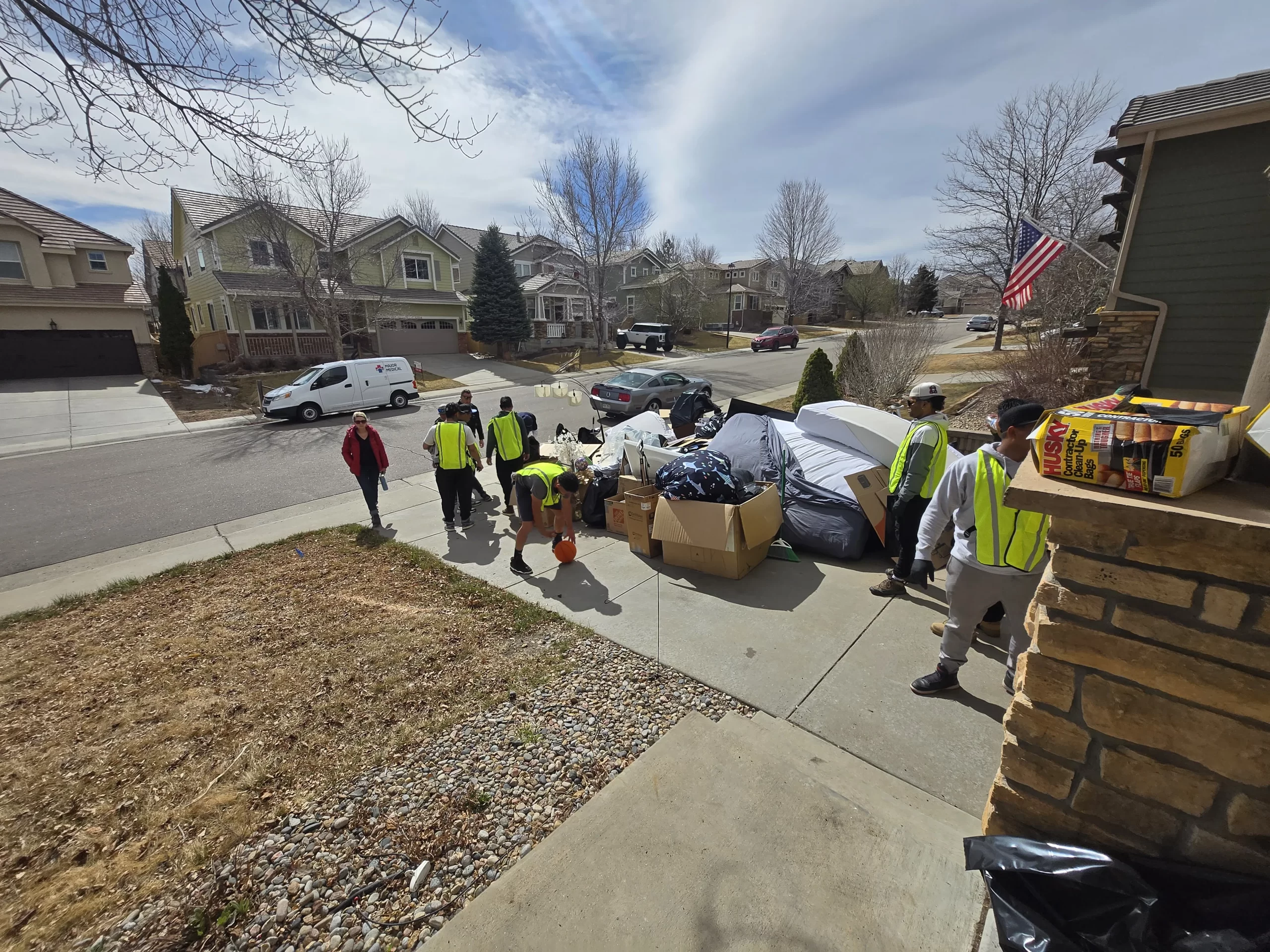
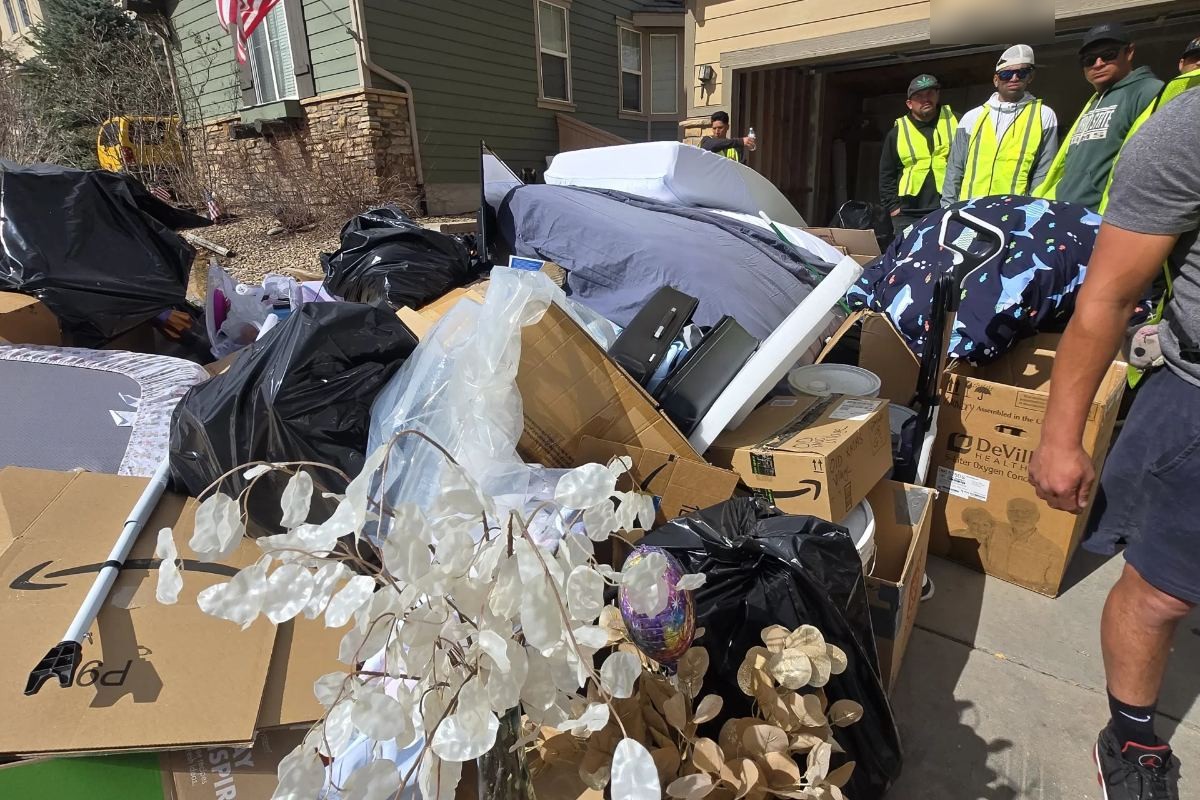
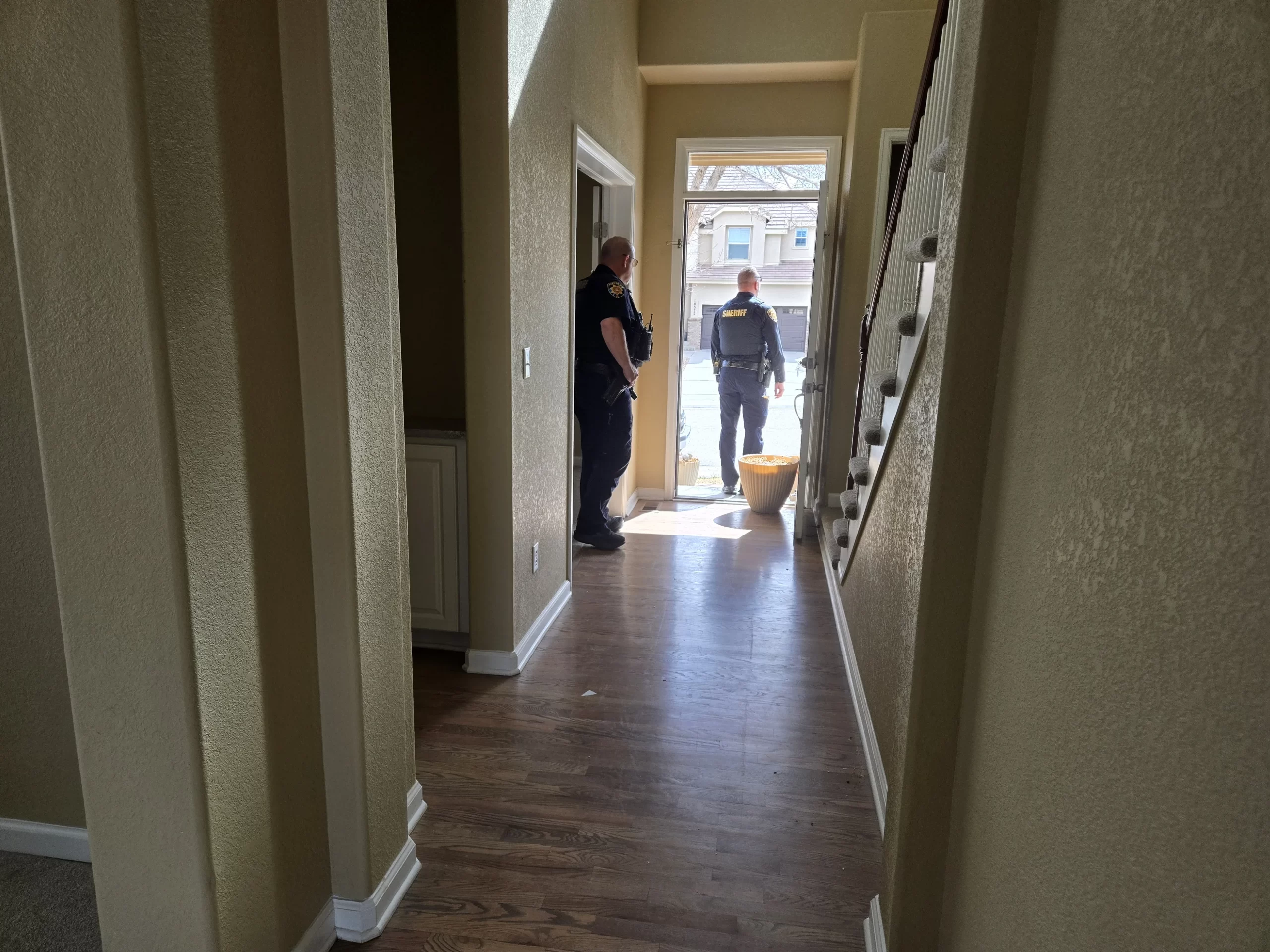
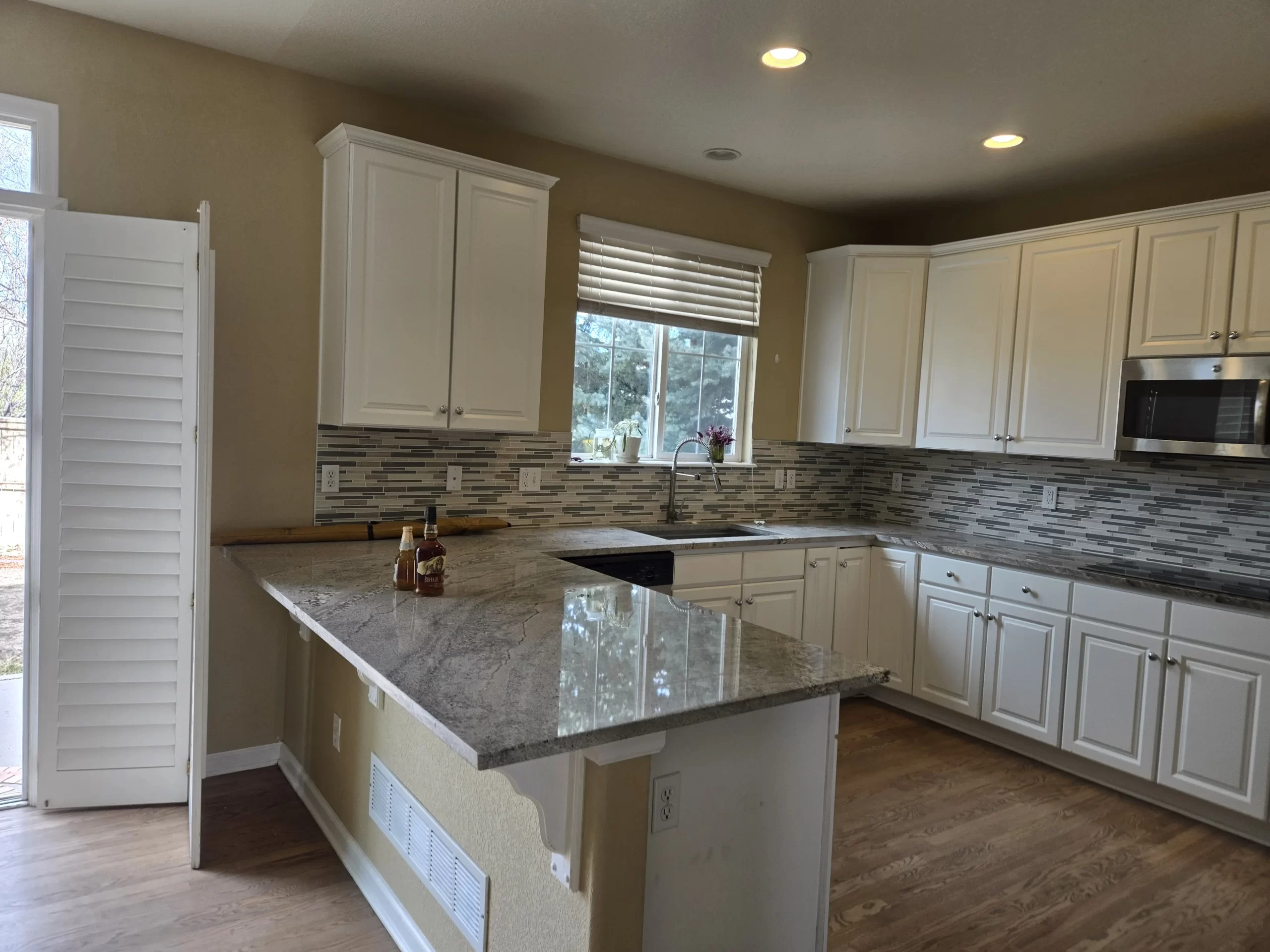
Complete Property Clearance — Interior & Exterior
We remove everything the tenant left behind. The unit is cleared to bare walls and floors — ready for your maintenance crew.
Local Eviction Specialist vs. National Franchises
Not all removal companies understand eviction law. Here is how a local specialist compares to the national chains.
| Factor | Junk Same Day | National Franchises |
|---|---|---|
| Sheriff Rules | Works from each county sheriff’s written instructions | Varies — ask whether they know your county’s time limit |
| Response Time | Staged & on-site for your scheduled set-out | Varies by location |
| Two-Phase Process | Set-out + return haul available | Varies — ask if they return for a second haul |
| Documentation | Time-stamped photos and disposal receipts | Varies |
| Pricing | Flat-rate per job, no franchise markup | Pricing varies by franchise location |
| Availability | 7 days/week, 7 AM–8 PM including holidays | Varies by location |
| Crew Consistency | Same experienced crew, owner-managed | Varies by location |
Our Guarantee to Property Owners
We carry full commercial general liability insurance and are bonded in the state of Colorado. Here is what that means for you.
Property Protection Guarantee
If our crew damages your property during cleanout, we cover the repair. Full commercial general liability insurance protects your asset from start to finish.
Reserved Crew, Every Time
Sheriff set-outs are booked at least 24 hours ahead, so we reserve and stage a right-size crew for your deputy’s window.
Satisfaction Guarantee
If you are not satisfied with the cleanout result, we return and address the issue at no additional charge. Your property, your standards.
Proof of insurance available upon request. COI provided same-day for property management companies.
Eviction Cleanout Pricing — Transparent & All-Inclusive
Every quote includes the full two-phase process, documentation package, and compliant disposal. No hidden fees. No franchise markup.
FASTEST: Call for Property Quote
Call (720) 902-8408 and describe your property. We quote in 3–5 minutes. Book 24+ hours ahead of your set-out.
MOST ACCURATE: Send Property Photos
Text photos of the unit to (720) 902-8408 showing scope and property layout. Same-day quote with full accuracy.
Why a sheriff set-out is priced per person
A sheriff set-out isn’t a haul you can push to tomorrow. The court sets the time, the sheriff comes once, and if our crew isn’t there and ready, the whole eviction can reset. That’s why the price is per person — each one is reserved, staged, and fully supplied for your window, long before we reach the curb.
We reserve your crew
We block the crew and pull them off other jobs so we’re never short-handed on your day.
We stage at our warehouse
The crew reports early to load trucks, check equipment, and gear up before the clock starts.
Metro travel, built in
We plan drive time to arrive before the sheriff, never after. Late isn’t an option.
Fully supplied, per person
Boxes, contractor bags, gloves, masks, biohazard PPE, and hydration — stocked for each crew member.
Sheriff-Assisted Eviction Pricing
When the sheriff is supervising the lockout, you are on a strict clock. Denver and Douglas counties give you 2 hours, Jefferson 1.5 hours, Adams and Arapahoe 1 hour. If your crew is too small or too slow, the deputy can cancel the eviction — you can lose your sheriff fees and have to reschedule while the writ is still valid.
50% deposit due on set-outs booked within 72 hours. Balance due when the set-out is done.
Typical crew sizes, based on Denver Sheriff guidelines (the deputy has the final say)
| Movers the Deputy Requires | 2-Hour Minimum | Typical Property Size |
|---|---|---|
| 4 people | $1,200 | Studio / 1 bedroom |
| 6 people | $1,800 | 2 bedroom |
| 8 people | $2,400 | 3 bedroom |
| 10 people | $3,000 | 4 bedroom |
| 12+ people | Big crew discount, call or text for your price | 5+ bedroom or large home |
The deputy sets how many movers you need; property size is only a rough guide (a 1-bedroom usually needs about 4, a 2-bedroom about 6). Crew size follows the sheriff’s time limit — 1 to 2 hours depending on county — so there are enough hands to finish the first time (if the clock runs out, the deputy can cancel the eviction). Whether you need a curbside set-out or a full haul-off affects the total; we confirm the exact number before you book.
Additional time is billed at $50 per person, in 15-minute increments. Most sheriff-supervised evictions complete within the 2-hour window — that is what we staff for.
Sheriff window by county
What is included
- Pre-staged crew arrives when the sheriff arrives
- Full property clearance within sheriff’s window
- All items moved to curb or designated area
- Photo documentation throughout
- Coordination with sheriff’s timeline
- No delays — begin loading immediately
Standard Eviction Cleanout Pricing
For non-sheriff cleanouts or when the sheriff has already left — our full two-phase process:
Heavy / Hoarder Unit
Extreme conditions, biohazard, or 4+ bedroom properties. Crew of 6–8. Full PPE. 4–8+ hours.
- Two-phase process (set-out + haul)
- Biohazard handling & containment
- 50+ time-stamped photos
- Disposal receipts per load
- Set-out summary report
- Dedicated project lead
Standard Eviction
Typical 1–3 bed unit. Furniture, debris, personal property. Crew of 3–4. 2–4 hours.
- Two-phase process (set-out + haul)
- Time-stamped photos
- Disposal receipts
- Set-out summary
Light Cleanout
Minimal items left behind. Clean unit with scattered belongings. 1–2 hours.
- Two-phase process (set-out + haul)
- Photos & disposal receipt
⚠️ Potential Surcharges (quoted before work begins)
- • Biohazard (mold, feces, needles): +$200–500
- • 3rd floor walk-up / no elevator: +$100–200
- • Extreme hoarding (cannot see floors): Custom quote required
- • Weekend & holiday priority dispatch: No surcharge
🏢 Managing Multiple Properties?
Ask about our property management partnership rates. Multi-unit discounts available for 3+ cleanouts per quarter. Call (720) 902-8408Real Sheriff Set-Outs We’ve Handled
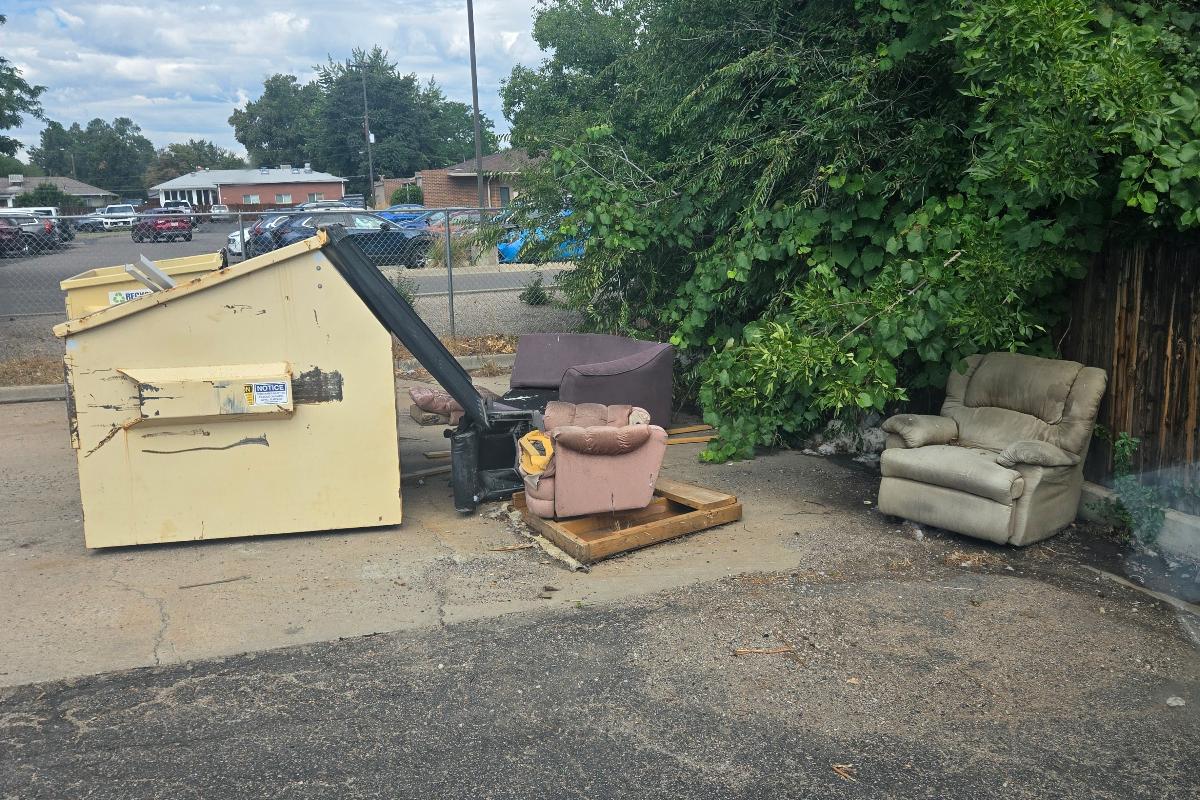
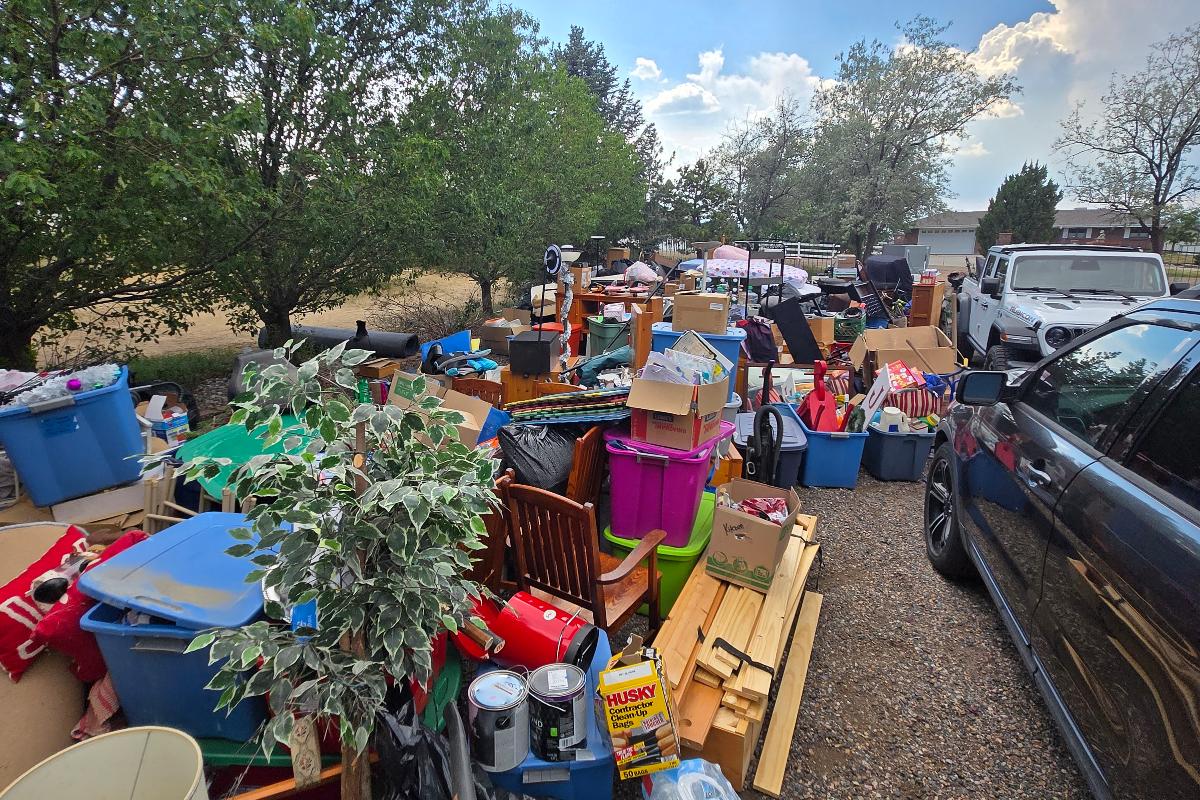
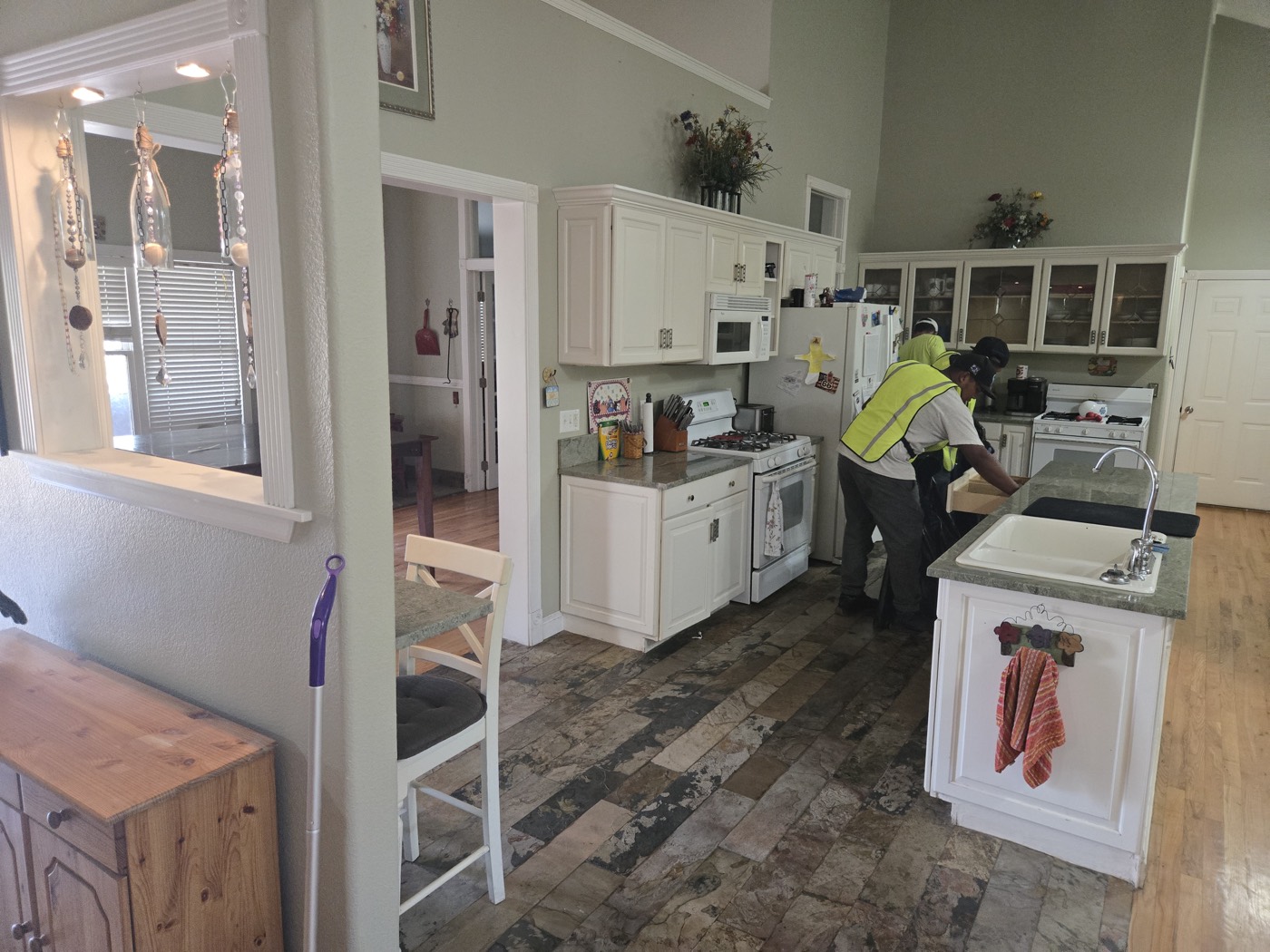
Actual Denver-metro eviction jobs — crews staged for the sheriff’s window (1–2 hours, depending on county), contents set out on time.

Why Denver Property Professionals Choose Junk Same Day
We are not a general removal company that occasionally does evictions. Eviction turnovers are a core part of our business.
Reserved & Staged Crew
Give us your sheriff date and we reserve the right-size crew in advance, staged so we arrive before the deputy — not scrambling after.
Insured & Bonded
Full commercial general liability. COI provided on request. Your property and your liability are protected.
Full Documentation Package
Time-stamped photos, disposal receipts, set-out summary. Delivered digitally within 24 hours of completion.
Colorado Law Expertise
We work from each county sheriff’s written set-out instructions — time limits, crew guidance and where belongings go.
Repeat Client Pricing
Multi-property discounts for portfolio managers.
Family-Owned, Not a Franchise
No franchise fees in your quote. Same crew every time. Owner-managed operations with direct accountability.
What Customers Say on Google
Real reviews from our Google Business Profile, quoted word for word.
“Quick, simple, could pay through Venmo which made it a breeze. They did what I needed on the same day I contacted them. Fair price”
“Noble and his crew were easy to work with and did a great job”
“Very fast, same day service. Easy to schedule too. The team was courteous and professional. Very reasonable rate for same day service. They do not disappoint!”
“Nobel and his team are great to deal with. They came and removed a large section within 24 hours. Awesome pricing and great company to deal with. I highly recommend using them for any junk removal services.”
Eviction Cleanout FAQ — For Property Managers & Landlords
Common questions from property managers, landlords, and investors about our eviction turnover process.
Sheriff set-outs must be booked in advance — we can’t take day-of or same-day requests, because we reserve and stage a dedicated, right-size crew for your specific window. Call as soon as you have your set-out date, time, and crew requirement from the sheriff, and at least 24 hours before the lockout. We operate 7 days a week, 7 AM to 8 PM, and once we’re on-site we begin the moment the sheriff leaves — no gaps, no waiting.
50% deposit due on set-outs booked within 72 hours. Balance due when the set-out is done.
Yes. We carry full commercial general liability insurance and are bonded in the state of Colorado. Certificate of Insurance (COI) provided same-day upon request. If our crew damages your property during the cleanout, we cover the repair. Many property management companies require COI before engaging vendors — we provide it as standard practice.
You receive a complete documentation package delivered digitally within 24 hours: (1) Time-stamped photos — before, during, and after each phase; (2) Itemized disposal receipts for every load; (3) a written set-out summary. This package is designed for your property management records and insurance documentation.
Colorado law doesn’t set a waiting period between the set-out and disposal, but some sheriffs ask for one (Arapahoe County requests 24 hours). Our two-visit process — set-out on lockout day, return haul later — gives the tenant a documented chance to collect belongings and lets you follow whatever your sheriff asks. Storage is optional: Colorado landlords aren’t required to store belongings (C.R.S. 13-40-122).
Yes. Property management companies with 3 or more cleanouts per quarter receive preferred partnership rates. We also offer volume discounts for multi-unit turnovers at the same property. Call (720) 902-8408 to discuss partnership pricing for your portfolio.
We handle biohazard units regularly. For mold, feces, urine saturation, needles, or chemical contamination, our crew uses OSHA-compliant PPE (respirators, hazmat suits, gloves), proper containment protocols, and enzymatic treatments. Biohazardous waste is disposed of separately per Colorado Health Department regulations. The biohazard surcharge ($200–$500) is quoted before work begins — no surprises.
Absolutely. We provide a single point of contact for your team and schedule around your maintenance crew’s timeline. We currently work with over 50 property management companies across Denver metro. Whether you need us to coordinate with your sheriff scheduling, maintenance crew, or leasing team — we handle the logistics.
Sheriff-assisted evictions are priced at $150 per crew member, per hour, with a 2-hour minimum. This is the typical sheriff on-site window in Denver County. Crew size follows sheriff guidance — Denver’s guideline is about 4 people for a 1-bedroom, 6 for a 2-bedroom, and 10–14 for 4–5 bedroom units, and the deputy can require more. If the job runs beyond 2 hours, additional time is billed at $50 per person, in 15-minute increments. For example, a 2-bedroom with 6 crew members for the standard 2-hour window costs $1,800. This covers the full set-out: every item moved from inside the unit to the curb or driveway within the sheriff’s time limit.
This is exactly why we staff to your sheriff’s crew guidance. Denver and Douglas counties give you 2 hours, Jefferson County 1.5 hours, and Adams and Arapahoe counties 1 hour. If the deputy decides there aren’t enough movers or the work can’t finish in time, the eviction can be canceled — you can lose your sheriff fees and have to reschedule while the writ is still valid. We pre-stage our full crew so work begins the moment the deputy grants permission to enter. In 6+ years, we have never missed a sheriff window.
No franchise markup means lower overhead and better pricing. Our quotes include full documentation and disposal receipts. You also work with the same owner-managed crew.
Eviction Cleanout Service Areas — Denver Metro
We serve the entire Denver metro — book your set-out ahead and we stage the crew to your sheriff’s date and window.
Manage properties outside metro Denver? Call (720) 902-8408 — we may still be able to help.
Related Services & Resources
- 📄 Colorado Dept. of Local Affairs – Eviction Info State guidance on eviction timelines and tenant rules.
- ⚖️ Colorado Judicial Branch – Eviction Forms Official court documents for eviction filings.
- 👮 Denver Sheriff – Civil Evictions Lockout procedures and scheduling information.
- 🏛️ City of Denver – Landlord-Tenant Info Local compliance requirements for property owners.
- 📘 Colorado Revised Statutes – Landlord/Tenant Law Official eviction statutes.
- 📝 Law Help Colorado – Eviction Legal Aid Neutral resource explaining local eviction law.
- 🔧 NOLO – Colorado Eviction Rules Plain-language breakdown of eviction procedures.
Get Your Unit Rent-Ready — Call Now
As soon as you have your sheriff date, time, and crew requirement, call us — we ask for at least 24 hours’ notice to reserve and stage your crew, and we deliver full documentation within 24 hours of completion. Insured, bonded, and trusted by Denver-area property managers.
Serving Denver metro property managers, landlords, in
Guides, timelines, and turnover services for Denver landlords and property managers. Every county has different sheriff rules, timelines, and fees. Click your city for county-specific eviction cleanout details.Eviction & Landlord Resources
City-Specific Eviction Cleanout Guides
Arapahoe County
Centennial
Arapahoe County
Englewood
Arapahoe County
Greenwood Village
Arapahoe County
Littleton
Arapahoe County
Thornton
Adams County
Westminster
Adams County
Northglenn
Adams County
Commerce City
Adams County
Federal Heights
Adams County
Lakewood
Jefferson County
Arvada
Jefferson County
Wheat Ridge
Jefferson County
Parker
Douglas County
Highlands Ranch
Douglas County
Castle Rock
Douglas County